
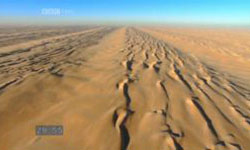
A total of 10 stories from across the Human Planet series, closely linked to the KS2 Geography curriculum, look at how humans have learnt to live with extremes, and explore how people across the globe live with extreme cold; live in desert environments without water; and how they live in mountain regions facing daily hazards.
- TV-Recordings
- Geography
- TV-Recordings
- No subtitles
- 60
A total of 10 stories from across the Human Planet series, closely linked to the KS2 Geography curriculum, look at how humans have learnt to live with extremes, and explore how people across the globe live with extreme cold; live in desert environments without water; and how they live in mountain regions facing daily hazards.

A look at the one environment that\'s been made by us for us - the city. Over half of the world\'s population now lives in the urban jungle. The city is built to keep untamed nature out - but nature can\'t be pushed away. From bed bugs sucking our blood at night to rats in our restaurants, many animals have adapted to a life with us.
- TV-Recordings
- Built Environment & Architecture
- TV-Recordings
- No subtitles
- 60
A look at the one environment that\'s been made by us for us - the city. Over half of the world\'s population now lives in the urban jungle. The city is built to keep untamed nature out - but nature can\'t be pushed away. From bed bugs sucking our blood at night to rats in our restaurants, many animals have adapted to a life with us.
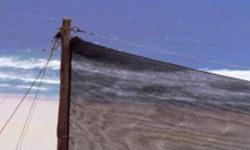
We can survive for weeks without food, but only days without water: it is the essential element of life. Yet many millions of us live in parched deserts around the world. In the second episode of Human Planet, we discover how the eternal quest for water brings huge challenges - and ingenious solutions - in the driest places on Earth.
- TV-Recordings
- Environmental Studies
- Other
- TV-Recordings
- No subtitles
- 60
We can survive for weeks without food, but only days without water: it is the essential element of life. Yet many millions of us live in parched deserts around the world. In the second episode of Human Planet, we discover how the eternal quest for water brings huge challenges - and ingenious solutions - in the driest places on Earth.
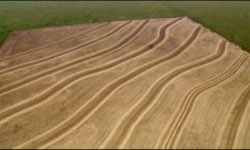
Grasslands feed the world. Over thousands of years, we humans have learned to grow grains on the grasslands and domesticate the creatures that live there. Our success has propelled our population to almost seven billion people.
- TV-Recordings
- Environmental Studies
- Other
- TV-Recordings
- No subtitles
- 60
Grasslands feed the world. Over thousands of years, we humans have learned to grow grains on the grasslands and domesticate the creatures that live there. Our success has propelled our population to almost seven billion people.
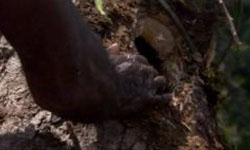
The rainforest is home to more species of plants and animals than any other habitat on the planet. But for humans, life there is not as easy as it looks. Life in the trees requires great skill, ingenuity and sheer bravery.
- TV-Recordings
- Environmental Studies
- Other
- TV-Recordings
- No subtitles
- 60
The rainforest is home to more species of plants and animals than any other habitat on the planet. But for humans, life there is not as easy as it looks. Life in the trees requires great skill, ingenuity and sheer bravery.
From lush cloud forests to bare summits that take your breath away, the higher you climb the tougher life gets on a mountain. Human Planet explores the extraordinary ways in which people survive at extreme altitudes where nature becomes utterly unforgiving.
- TV-Recordings
- Geography
- TV-Recordings
- No subtitles
- 60
From lush cloud forests to bare summits that take your breath away, the higher you climb the tougher life gets on a mountain. Human Planet explores the extraordinary ways in which people survive at extreme altitudes where nature becomes utterly unforgiving.

As an air-breathing animal, the human is not built to survive in water. But people have found ways to live an almost aquatic life so they can exploit the sea\'s riches.
- TV-Recordings
- Geography
- TV-Recordings
- No subtitles
- 60
As an air-breathing animal, the human is not built to survive in water. But people have found ways to live an almost aquatic life so they can exploit the sea\'s riches.

Rivers provide the essentials of life: fresh food and water. They often provide natural highways and enable us to live in just about every environment on Earth. But rivers can also flood, freeze or disappear altogether!
- TV-Recordings
- Environmental Studies
- TV-Recordings
- No subtitles
- 60
Rivers provide the essentials of life: fresh food and water. They often provide natural highways and enable us to live in just about every environment on Earth. But rivers can also flood, freeze or disappear altogether!
-
Inside Nature's Giants
-
Channel 4
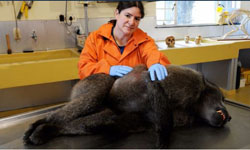
The award-winning series that gets under the skin of some of the largest animals on the planet,exploring their anatomy to reveal how these creatures really work.
- TV-Recordings
- No subtitles
- 550
The award-winning series that gets under the skin of some of the largest animals on the planet,exploring their anatomy to reveal how these creatures really work.

The second run of the BAFTA Award-winning series reveals the anatomy of some of nature\'s most successful predators.The experts travel to South Africa to dissect a 900kg, 15-foot-long great white shark.
- TV-Recordings
- Biology
- Medical Sciences
- TV-Recordings
- No subtitles
- 50
The second run of the BAFTA Award-winning series reveals the anatomy of some of nature\'s most successful predators.The experts travel to South Africa to dissect a 900kg, 15-foot-long great white shark.
-
Inside Nature's Giants - Monster Python
-
Channel 4
The experts venture into the swamps of the Florida Everglades, where giant Burmese pythons are thriving.
- TV-Recordings
- Biology
- TV-Recordings
- No subtitles
- 50
The experts venture into the swamps of the Florida Everglades, where giant Burmese pythons are thriving.
-
Inside Nature's Giants - The Big Cats
-
Channel 4
The experts dissect a lion and a tiger, and travel to South Africa to see lions in the wild.
- TV-Recordings
- Biology
- TV-Recordings
- No subtitles
- 50
The experts dissect a lion and a tiger, and travel to South Africa to see lions in the wild.
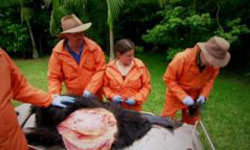
The Bafta-winning series returns to Australia on the trail of a bird that\'s been described as a living dinosaur. The cassowary hides in Queensland\'s tropical rainforests.
- TV-Recordings
- Biology
- TV-Recordings
- No subtitles
- 47
The Bafta-winning series returns to Australia on the trail of a bird that\'s been described as a living dinosaur. The cassowary hides in Queensland\'s tropical rainforests.
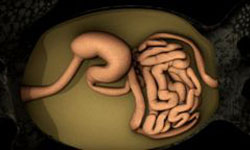
The team travel to Florida to dissect the ocean's largest reptile - the leatherback turtle. They uncover the evolutionary mystery of how turtles developed shells to protect themselves from some of the sharpest-toothed predators on the planet.
- TV-Recordings
- Biology
- TV-Recordings
- English subtitles
- 47
The team travel to Florida to dissect the ocean's largest reptile - the leatherback turtle. They uncover the evolutionary mystery of how turtles developed shells to protect themselves from some of the sharpest-toothed predators on the planet.

-
Inside Nature's Giants - The Racehorse
-
Channel 4
The team explore how this animal has been biologically engineered for speed. They dissect an elite racehorse to reveal the extraordinary spring system that propels it to 45mph, its super-sized organs and built-in turbo-booster.
- TV-Recordings
- Biology
- Medical Sciences
- TV-Recordings
- No subtitles
- 50
The team explore how this animal has been biologically engineered for speed. They dissect an elite racehorse to reveal the extraordinary spring system that propels it to 45mph, its super-sized organs and built-in turbo-booster.
-
Inside Nature's Giants: Polar Bear
-
Channel 4
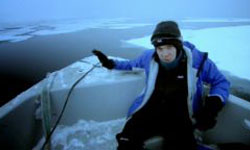
The team join Inuit hunters and scientists studying polar bears off the coast of Greenland. Polar bears have become a symbol of climate change as their habitat is threatened. And, at the top of the food chain, they are especially vulnerable to physiological side effects from man-made pollutants.
- TV-Recordings
- Biology
- Environmental Studies
- TV-Recordings
- English subtitles
- 62
The team join Inuit hunters and scientists studying polar bears off the coast of Greenland. Polar bears have become a symbol of climate change as their habitat is threatened. And, at the top of the food chain, they are especially vulnerable to physiological side effects from man-made pollutants.
-
Inside Natures Giants - The Crocodile
-
Channel 4
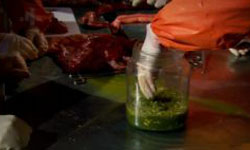
Veterinary scientist Mark Evans joins experts in anatomy, evolution and behaviour in a bid to get under the skin of the crocodile.
- TV-Recordings
- Biology
- Medical Sciences
- TV-Recordings
- No subtitles
- 30
Veterinary scientist Mark Evans joins experts in anatomy, evolution and behaviour in a bid to get under the skin of the crocodile.
-
Inside Natures Giants - The Whale
-
Channel 4
In this episode experts dissect a 65-foot, 60-ton fin whale - second only in size to its \'cousin\' the blue whale - that has died after being stranded off the coast of Ireland. It\'s a race against time as whale anatomist Joy Reidenberg flies in from New York before the animal\'s decomposition causes it to explode on the beach.
- TV-Recordings
- Biology
- TV-Recordings
- No subtitles
- 48
In this episode experts dissect a 65-foot, 60-ton fin whale - second only in size to its \'cousin\' the blue whale - that has died after being stranded off the coast of Ireland. It\'s a race against time as whale anatomist Joy Reidenberg flies in from New York before the animal\'s decomposition causes it to explode on the beach.
-
Krakatoa Revealed
-
Nick Petford
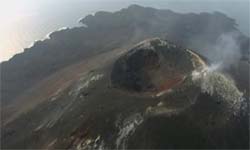
Documentary, featuring specially commissioned research, which reveals for the first time what really happened during the eruption of the volcanic island Krakatoa in 1883
- TV-Recordings
- Geography
- History
- TV-Recordings
- No subtitles
- 11
Documentary, featuring specially commissioned research, which reveals for the first time what really happened during the eruption of the volcanic island Krakatoa in 1883
-
Life
-
David Attenborough
David Attenborough looks at the extraordinary ends to which animals and plants go in order to survive. Featuring epic spectacles, amazing TV firsts and examples of new wildlife behaviour.
- TV-Recordings
- No subtitles
- 480
David Attenborough looks at the extraordinary ends to which animals and plants go in order to survive. Featuring epic spectacles, amazing TV firsts and examples of new wildlife behaviour.
-
Life - Challenges of Life
-
David Attenborough
In nature, living long enough to breed is a monumental struggle. Many animals and plants go to extremes to give themselves a chance.
- TV-Recordings
- Biology
- TV-Recordings
- No subtitles
- 60
In nature, living long enough to breed is a monumental struggle. Many animals and plants go to extremes to give themselves a chance.
-
Life - Fish
-
David Attenborough
Fish dominate the planet\'s waters through their astonishing variety of shape and behaviour.
- TV-Recordings
- Biology
- TV-Recordings
- No subtitles
- 60
Fish dominate the planet\'s waters through their astonishing variety of shape and behaviour.
-
Life - Hunters and Hunted
-
David Attenborough
Mammals\' ability to learn new tricks is the key to survival in the knife-edge world of hunters and hunted. In a TV first, a killer whale off the Falklands does something unique: it sneaks into a pool where elephant seal pups learn to swim and snatches them, saving itself the trouble of hunting in the open sea.
- TV-Recordings
- Biology
- TV-Recordings
- No subtitles
- 58
Mammals\' ability to learn new tricks is the key to survival in the knife-edge world of hunters and hunted. In a TV first, a killer whale off the Falklands does something unique: it sneaks into a pool where elephant seal pups learn to swim and snatches them, saving itself the trouble of hunting in the open sea.
-
Life - Insects
-
BBC
There are 200 million insects for each of us. They are the most successful animal group ever. Their key is an armoured covering that takes on almost any shape.
- TV-Recordings
- Biology
- TV-Recordings
- No subtitles
- 60
There are 200 million insects for each of us. They are the most successful animal group ever. Their key is an armoured covering that takes on almost any shape.
-
Life - Mammals
-
David Attenborough
Mammals dominate the planet. They do it through having warm blood and by the care they lavish on their young.
- TV-Recordings
- Biology
- TV-Recordings
- No subtitles
- 60
Mammals dominate the planet. They do it through having warm blood and by the care they lavish on their young.

-
Life - Plants
-
David Attenborough
Plants\' solutions to life\'s challenges are as ingenious and manipulative as any animal\'s.
- TV-Recordings
- Biology
- TV-Recordings
- No subtitles
- 59
Plants\' solutions to life\'s challenges are as ingenious and manipulative as any animal\'s.
-
Life - Primates
-
David Attenborough
Primates are just like us - intelligent, quarrelsome, family-centred.
- TV-Recordings
- Biology
- TV-Recordings
- No subtitles
- 58
Primates are just like us - intelligent, quarrelsome, family-centred.

-
Life - Reptiles and Amphibians
-
David Attenborough
Reptiles and amphibians look like hang-overs from the past. But they overcome their shortcomings through amazing innovation.
- TV-Recordings
- Biology
- TV-Recordings
- No subtitles
- 60
Reptiles and amphibians look like hang-overs from the past. But they overcome their shortcomings through amazing innovation.

-
Life In Cold Blood
-
BBC 1
David Attenborough reveals the surprising truth about the cold-blooded lives of reptiles and amphibians. These animals are as dramatic, as colourful and as tender as any other animals.
- TV-Recordings
- No subtitles
- 180
David Attenborough reveals the surprising truth about the cold-blooded lives of reptiles and amphibians. These animals are as dramatic, as colourful and as tender as any other animals.

The final programme covers the most ancient of the reptiles: the crocodiles and turtles. In the Galápagos Islands, among the giant tortoises, Attenborough explains how the creatures came to develop their shells as a defence against predators.
- TV-Recordings
- Biology
- TV-Recordings
- No subtitles
- 58
The final programme covers the most ancient of the reptiles: the crocodiles and turtles. In the Galápagos Islands, among the giant tortoises, Attenborough explains how the creatures came to develop their shells as a defence against predators.